Before getting into the episode itself, I wanted to share something I noticed after we recorded it. In the moment, it felt like a good conversation, but nothing that immediately stood out as a major takeaway. However, over the next few days, parts of it kept resurfacing, not as big, obvious insights, but as subtle shifts in how I was thinking about decisions, leadership, and what actually matters right now.
That reflection connected with something that had already been sitting in the background for a while. The pace of change, the constant noise, and the pressure to make the right decisions while everything still feels like it’s moving underneath you. It feels like most companies are trying to solve the same problem at the same time, which is figuring out what the future actually looks like while trying not to fall behind in the process.
That’s what made this conversation with Keith Cowing particularly interesting. Instead of trying to predict what’s coming next, we ended up focusing on something far more practical, which is how you operate when the future is still unclear. And that naturally brings the conversation back to something fundamental, which is how you define leadership in the first place.
Leadership isn’t authority. It’s clarity.
When I asked Keith what leadership really means, he didn’t go into titles or structures. He broke it down into something much simpler, and honestly, much harder.
Leadership is about clarity!
Not just clarity in your own head, but clarity that your entire team can see, understand, and repeat. It’s being able to define what success actually looks like in a way that everyone is aligned on, not just directionally, but specifically.
It’s easy to think you’re clear because the idea makes sense to you. But real clarity is when your team can articulate it just as well as you can. And from there, everything else follows. Communication, decision-making, execution. If the clarity isn’t there, none of those things hold.
The hidden cost of too many leaders
One of the more interesting parts of the conversation was around decision-making, especially in environments where you have multiple strong leaders in the room.
On the surface, that sounds like a good thing. More perspectives, more ideas, more experience. But without structure, it can quietly turn into the opposite.
Keith shared an analogy about a group of high-performing hens that were put together, expecting higher output. Instead, they ended up competing with each other to the point where only one remained. It’s a strange example, but the point lands. When you put too many decision-makers together without clarity on who actually makes the call, progress slows down or stops entirely.
What works better is something simpler. One person owns the decision. That doesn’t mean they decide in isolation. It means they gather input, create space for debate, and then make the call. Because in moments where speed matters, you can’t afford to wait for consensus. You either move forward imperfectly or you don’t move at all. And not moving is usually the bigger risk.
The real challenge right now isn’t AI. It’s how fast you can learn.
At some point, the conversation naturally shifted to AI, because it’s impossible to ignore right now.
Every company is reacting to it in some way. Some are pivoting aggressively. Others are trying to layer it into what already exists. And a lot of people are just trying to understand what it actually means for them.
What stood out to me was Keith’s perspective on what actually matters in all of this. It’s not about having the perfect strategy. It’s about how quickly you can learn.
Because the reality is, no one actually knows what the “right” move is yet. The companies that win won’t be the ones who guessed correctly from the beginning. They’ll be the ones who reassess faster, test faster, and adapt faster than everyone else. That requires a different kind of mindset.
It requires being willing to question things that have worked for a long time. It requires letting go of assumptions that once felt solid. And it requires making decisions without having complete information, which is uncomfortable for most people. But that’s the environment we’re in.
Clarity vs certainty
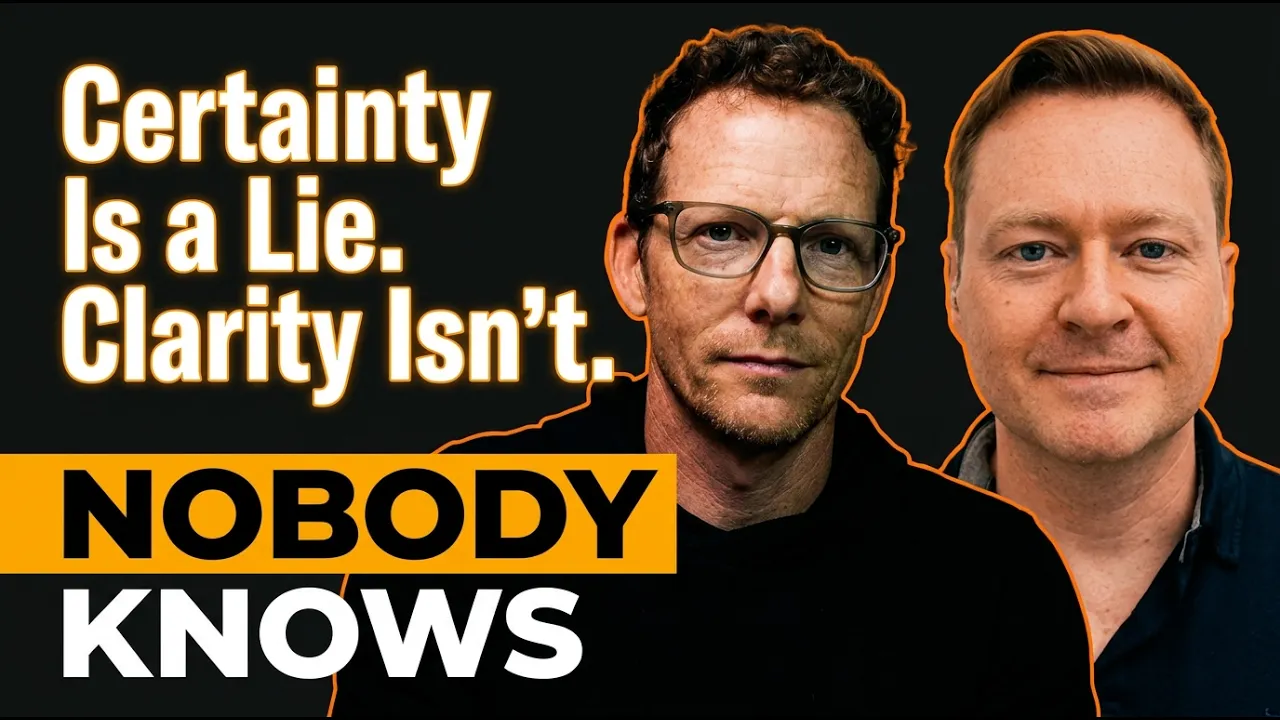
This was probably the idea that stayed with me the most. There’s a difference between clarity and certainty, and most leaders confuse the two. Certainty is knowing what’s going to happen. And right now, that’s just not possible.
Clarity, on the other hand, is knowing what you believe, what you’re betting on, and why you’re moving in a certain direction, even if you don’t know how it’s going to play out. You can’t give your team certainty right now. But you can give them clarity.
You can say, this is the direction we’re choosing, this is what we’re optimizing for, and this is why it makes sense based on what we know today. And as new information comes in, we’ll adjust. That creates momentum without pretending to have answers you don’t actually have.
Why data isn’t enough anymore
There was also an interesting shift in how we talked about decision-making. For a long time, the default approach has been data-driven decisions. Look at the numbers, analyze the trends, and move based on what the data tells you.
But what happens when the data doesn’t exist yet? When you’re dealing with something like AI, where the landscape is changing faster than historical data can keep up, you can’t rely on data alone.
This is where judgment comes in. Not guesswork, but informed intuition. The ability to look at patterns, understand context, and make a call even when the information is incomplete. There are moments in business where you optimize something that already works, and data is incredibly valuable there. But when you’re making a fundamental shift or a zero-to-one decision, data can only take you so far. At some point, you have to decide.
The skill most leaders overlook
Toward the end of the conversation, we talked about something that doesn’t get enough attention, especially right now. Listening. Not just hearing words, but actually paying attention.
Keith broke this down into three levels. Internal listening, where your mind is racing, and you’re thinking about what to say next. Focused listening, where you’re fully present with the person in front of you. And global listening, where you’re picking up on everything, including what isn’t being said.
Most of us operate in that first level more than we realize, especially in a world where there’s constant input from every direction. But the ability to slow that down and actually listen, whether it’s to your team, your customers, or the market, is what gives you the insight you need to make better decisions.
Because sometimes the answer isn’t something you need to create. It’s something you need to notice.
State over script
There was one final idea that tied everything together. State is more important than script. It’s easy to think that better decisions come from better frameworks, better strategies, or better preparation. And while those things matter, they don’t matter as much as how you show up.
If you’re exhausted, distracted, or overwhelmed, it doesn’t matter how good your plan is. You won’t execute it well. But if you’re clear, focused, and present, you can navigate uncertainty far more effectively, even without having everything figured out. And in a time like this, that might be the most important advantage you can have.
This conversation didn’t give a neat, predictable answer to what’s coming next. But it did make one thing clear. The leaders who win won’t be the ones who had it all figured out early. They’ll be the ones who stayed clear, kept learning, and kept moving, even when things didn’t feel certain.
If you found this conversation valuable, you can watch the full episode and subscribe to my YouTube channel so you don’t miss what’s coming next. New episodes go live every alternate Thursday.